Published October 2026
Since February 11, 2025, the Citywide Housing Incentive Program (CHIP) is how Los Angeles trades extra density for affordable homes. The old Transit Oriented Communities (TOC) program did not disappear. It was rewritten into CHIP as the Transit Oriented Incentive Areas.
The short version
- CHIP took effect February 11, 2025, alongside the Housing Element Sites and Minimum Density Ordinance and the Resident Protections Ordinance.
- It has three paths: the State Density Bonus Program, the Mixed Income Incentive Program (MIIP) and the Affordable Housing Incentive Program (AHIP).
- TOC’s transit tiers now live in MIIP as Transit Oriented Incentive Areas (TOIA): sites within a half mile of a major transit stop.
- MIIP adds Opportunity Corridors: major streets with bus and rail access in Higher Opportunity Areas.
- Affordable units carry 99-year covenants, with limited exceptions.
What TOC was
TOC came from Measure JJJ (2016) and ran from 2017 under city guidelines. It used four tiers based on distance to transit and type of service. Projects got density bonuses of up to 80%, plus FAR, height and parking relief, in exchange for setting aside roughly 8% to 25% of units as affordable, depending on tier and income level.
What changed under CHIP
- It is code now. TOC was a set of guidelines. CHIP is an ordinance in the zoning code.
- Location matters twice. TOIA incentives depend on the transit tier and on whether the site is in a Higher or Lower Opportunity Area. In many cases the city says the incentives go beyond TOC’s.
- Base incentives plus a menu. Base incentives cover density, FAR, height and parking. A menu adds yard, open space and lot coverage relief, with extra bonuses for child care, multi-bedroom units and similar public benefits.
- 100% affordable gets its own path. AHIP requires at least 80% affordable units and reaches sites owned by public agencies, faith-based organizations, community land trusts and cooperatives.
- Some sites are out. Projects in very high fire hazard severity zones and sea-level-rise areas cannot use the menu of incentives, and single-family zones cannot use MIIP.
How it is working
The city’s first-year report counts 242 projects and 28,526 proposed homes filed between February 2025 and February 2026, 10,804 of them affordable. The State Density Bonus path carried 42% of the homes and AHIP 37%. MIIP carried 18%, and 80% of MIIP projects used the transit areas. For scale, TOC’s first year produced 9,479 homes.
What to watch out for
- Replacement rules. The Resident Protections Ordinance adds replacement and anti-displacement requirements on sites with existing units.
- SB 79 overlaps. Near major stations, state law sets its own minimums. Los Angeles is phasing SB 79 in, so compare both. See our SB 79 note.
- Corridor transition areas drew zero projects in year one. The city flagged feasibility limits there.
How we use it
On a Los Angeles site, we run CHIP’s paths side by side with the State Density Bonus and pick the one that gives the best building, not just the biggest number. Our Courtyard 55 concept in Alhambra shows the building type we test: 55 homes around one shared courtyard, with retail at the street. Alhambra is outside the city, so CHIP does not apply there, but the same plan logic carries over. More on our TOC and density bonus work.
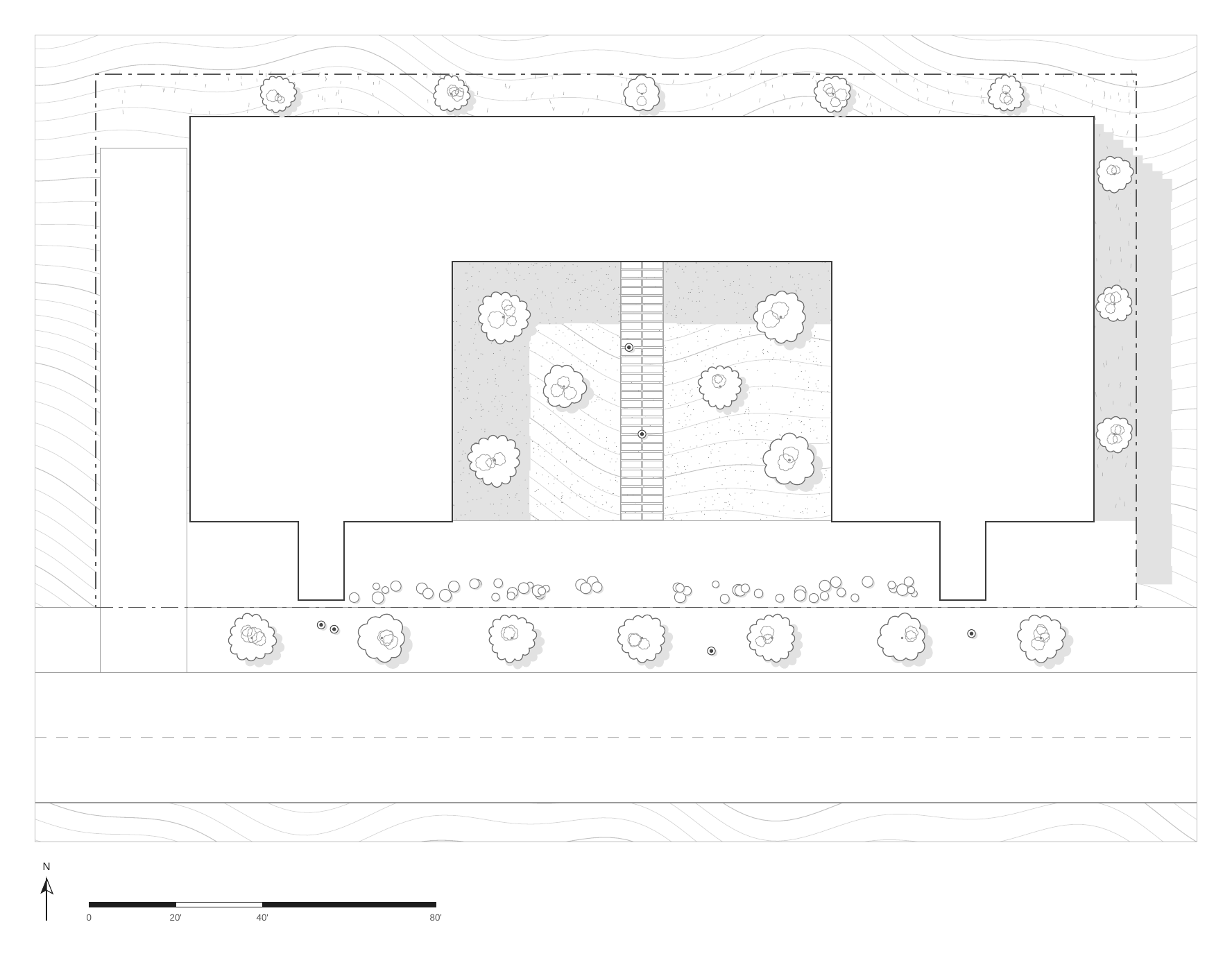
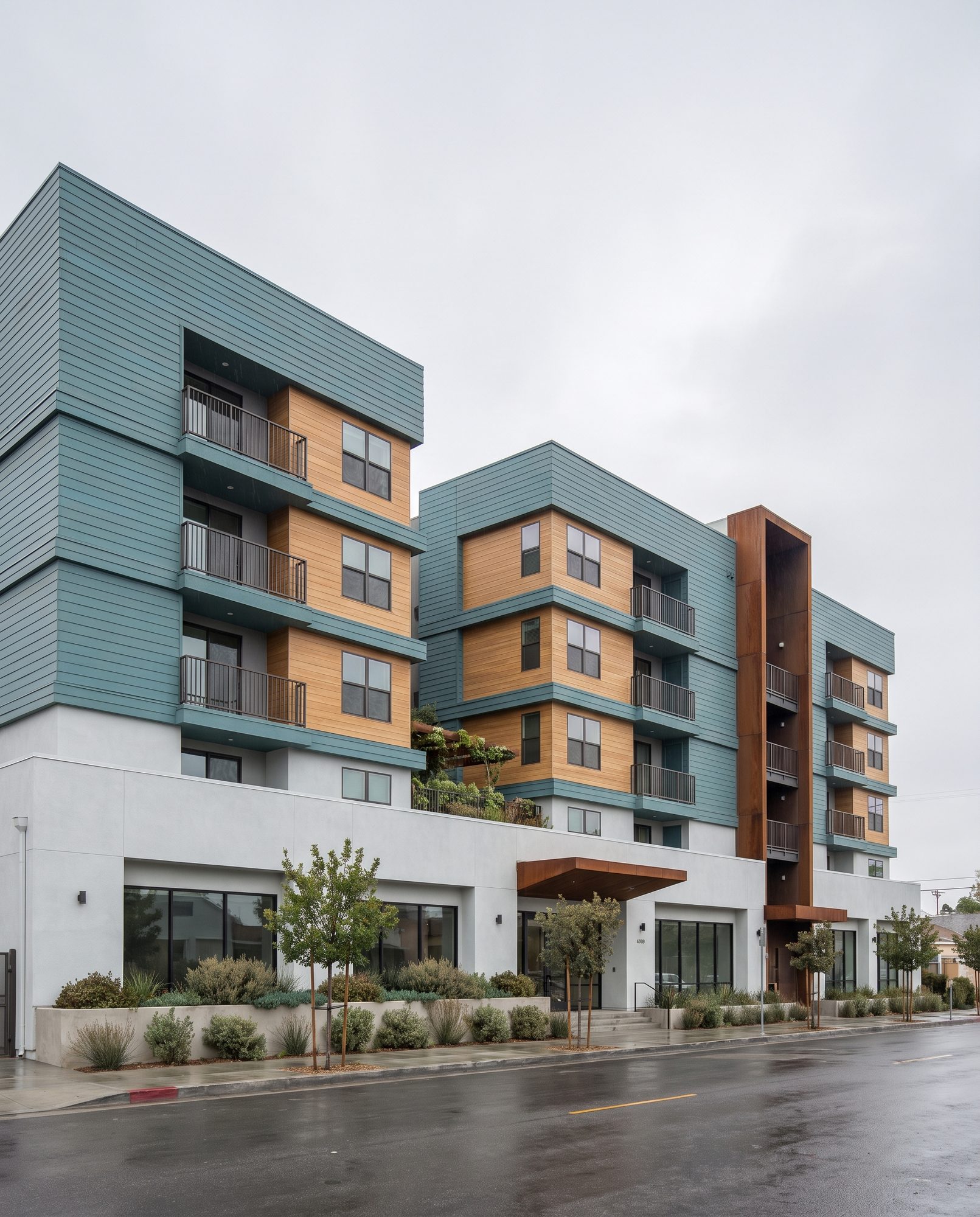
Concept: 55 homes around one shared courtyard, with retail at the street.
Have a lot in mind?
Send us the address and we’ll tell you what it can hold. Book a free consultation → · Follow @ydsarch on Instagram