Published October 2026
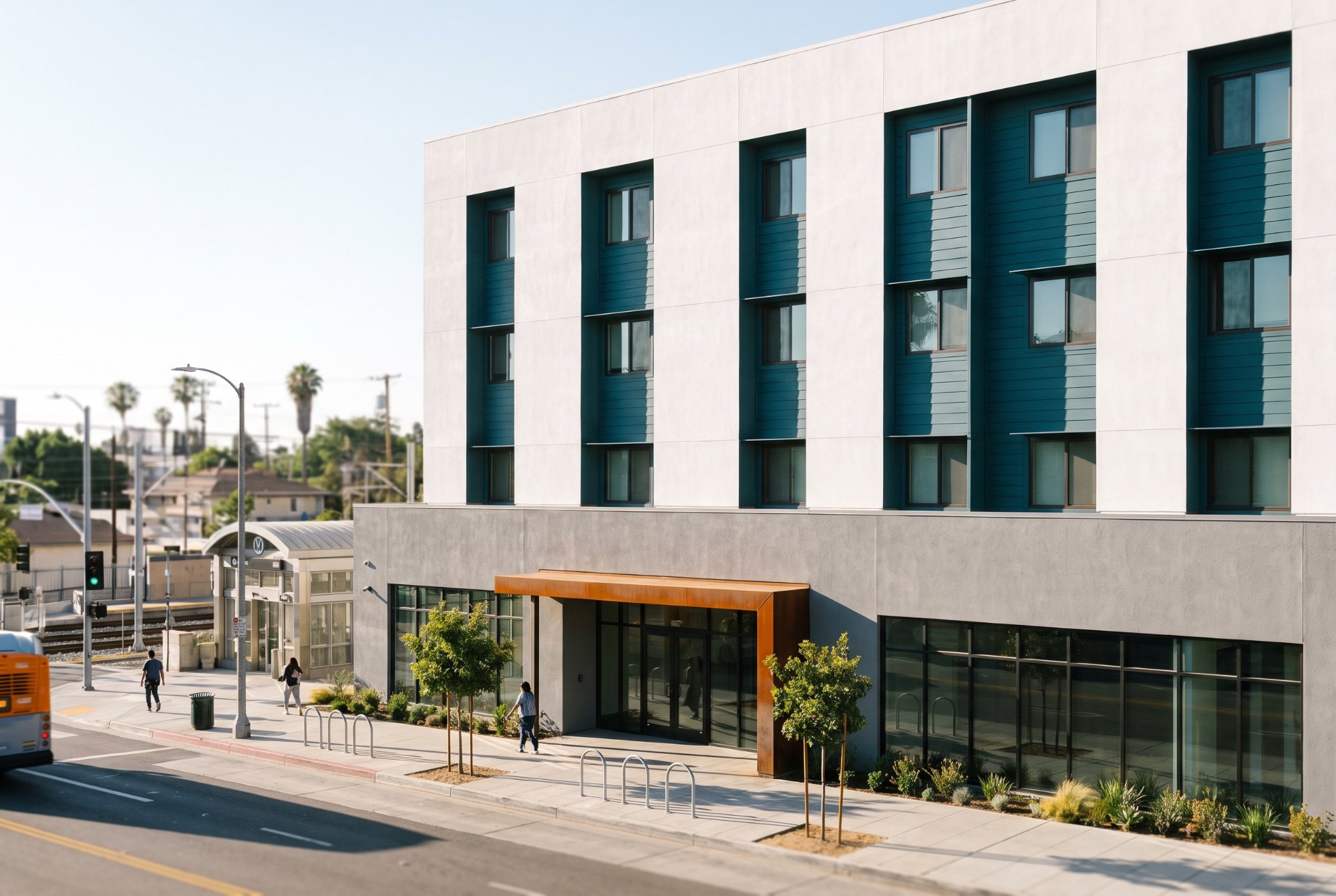
SB 79 sets state minimums for height and density on housing sites within a half mile of major rail and bus rapid transit stops. It took effect July 1, 2026. In the City of Los Angeles, though, a local ordinance holds it back on most affected sites for now.
The short version
- Signed October 10, 2025 (Chapter 512, Statutes of 2025). The upzoning applies in cities from July 1, 2026; unincorporated county areas follow later, tied to the next housing element cycle.
- It covers stops in eight counties, including Los Angeles, Orange and San Diego.
- Within a quarter mile of a Tier 1 stop (heavy and high-frequency commuter rail): 75 ft, 120 units per acre, 3.5 FAR.
- Sites right next to a stop get 20 ft, 40 units per acre and 1.0 FAR more.
- Projects over 10 units must set aside 7% extremely low, 10% very low or 13% lower income homes.
What the law allows
SB 79 sorts stops into two tiers. Tier 1 is heavy rail and commuter rail with frequent service. Tier 2 is light rail, bus rapid transit and less frequent commuter rail. The closer the site, the more you can build:
- Tier 1, within 1/4 mile: 75 ft, 120 du/ac, 3.5 FAR.
- Tier 1, 1/4 to 1/2 mile: 65 ft, 100 du/ac, 3.0 FAR.
- Tier 2, within 1/4 mile: 65 ft, 100 du/ac, 3.0 FAR.
- Tier 2, 1/4 to 1/2 mile: 55 ft, 80 du/ac, 2.5 FAR.
The outer ring applies only in cities of 35,000 people or more. Add the adjacency bonus and the range runs from 55 to 95 ft and 80 to 160 units per acre. Parking minimums near major transit were already removed by AB 2097.
What it means in Los Angeles
SB 79 lets cities adopt their own transit plans and phase the law in. Los Angeles did. In June 2026 the City Council adopted a Phased Implementation Ordinance, with an urgency clause, and a Low-Rise Ordinance.
- The phased ordinance temporarily exempts sites in low-resource areas, very high fire hazard severity zones, areas at risk from sea-level rise, sites with historic resources, and sites where zoning already allows at least half of SB 79’s standards.
- The exemption runs until about a year after the next Housing Element, likely around 2030. Law firm estimates put about 90% of expected SB 79 sites in that bucket.
- The Low-Rise Ordinance allows low-rise housing, up to four stories, within a half mile of designated stations, including in single-family areas.
What to watch out for
- Check your parcel, not the map radius. Tier, distance and the city’s exemptions all change the answer.
- Existing tenants matter. SB 79 bars demolishing certain rent-controlled or recently occupied housing.
- Denials get harder. From January 1, 2027, denying an SB 79 project in a high-resource area is presumed to violate the Housing Accountability Act.
How we use it
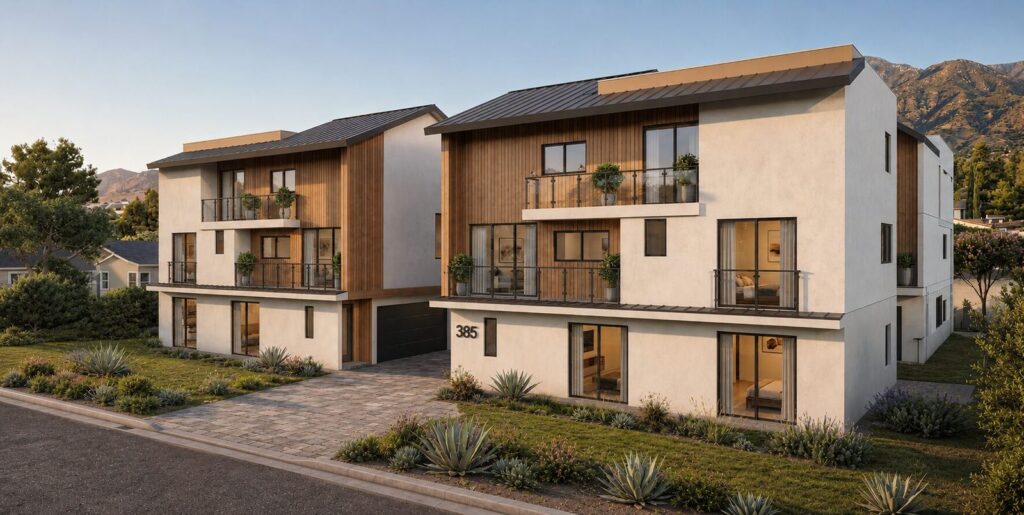
For a site near a station, we test SB 79 against the city’s CHIP and the State Density Bonus and draw the one that pencils. Ten homes or fewer skip SB 79’s affordability rule, which suits a building like Cuckoo Complex in San Diego, six units shaped by light, air and courtyards. At larger scale, our Courtyard 55 concept shows how 55 homes can share one courtyard with retail at the street. More in our multifamily work.
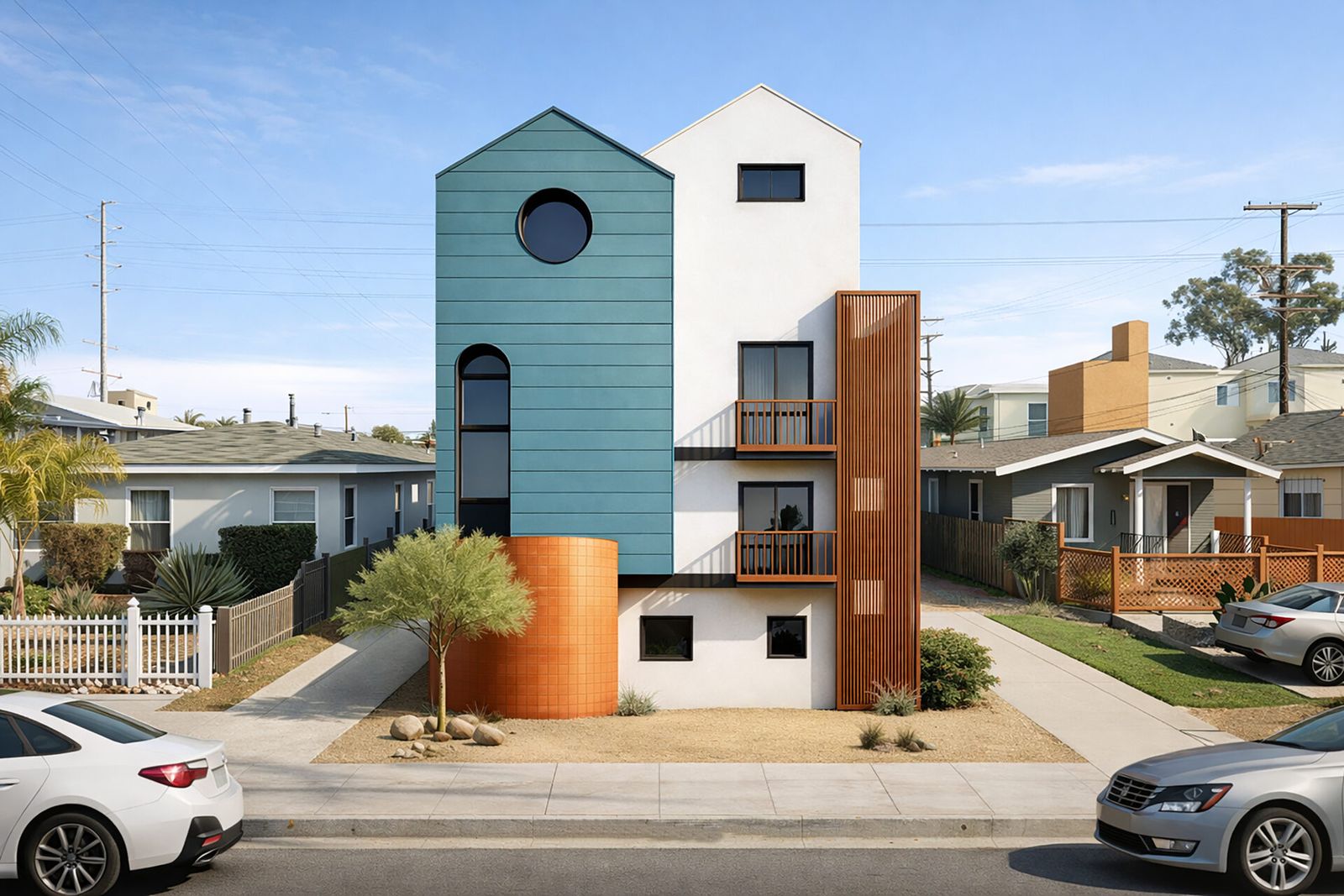
Six homes in San Diego, with density shaped by light, air and courtyards.
Have a lot in mind?
Send us the address and we’ll tell you what it can hold. Book a free consultation → · Follow @ydsarch on Instagram