Updated October 2026
More families in Los Angeles are living together across generations. The design question is simple: how do two or three households share one lot and still each get a door, a kitchen and some quiet?
The short version
- 18% of Americans lived in multigenerational homes in 2021, up from 7% in 1971 (Pew Research Center).
- About one in four adults aged 25 to 34 lives in one.
- Cost drives it: rent, student debt and childcare. Culture and caregiving keep it going.
- Five layouts cover most cases: stacked, separate wings, hybrid stacked, extended and flexible.
- On an LA lot, the legal tools are an ADU, a JADU, a duplex or a small-lot split.
Why it is growing
Pew counted 59.7 million people in multigenerational homes in 2021. Americans under 40 accounted for almost half of the growth since 2000. Housing costs push adult children home, and aging parents need care nearby. Shared households also run lower poverty rates than other living arrangements.
The catch is privacy. Most families want to be together without living in each other’s kitchens. That is a design problem, and it has known answers.
Five layouts that work
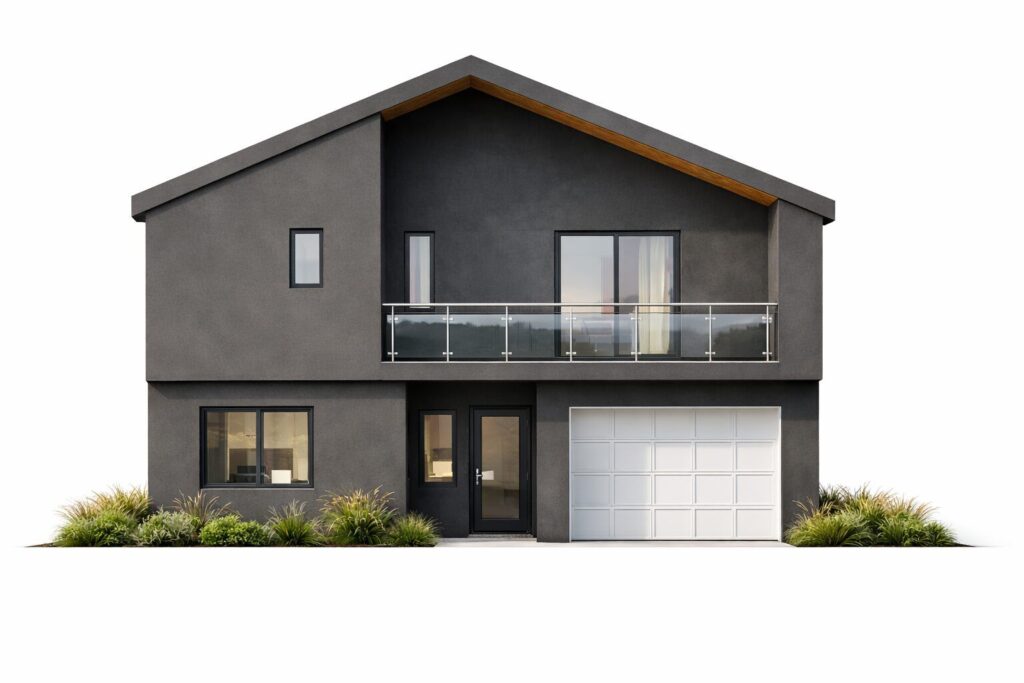
- Stacked. One household per floor, each with its own kitchen and bath. Uses the least land, so it suits city lots.
- Separate wings. Two wings around a shared courtyard or garden. More private, but it needs a wider lot.
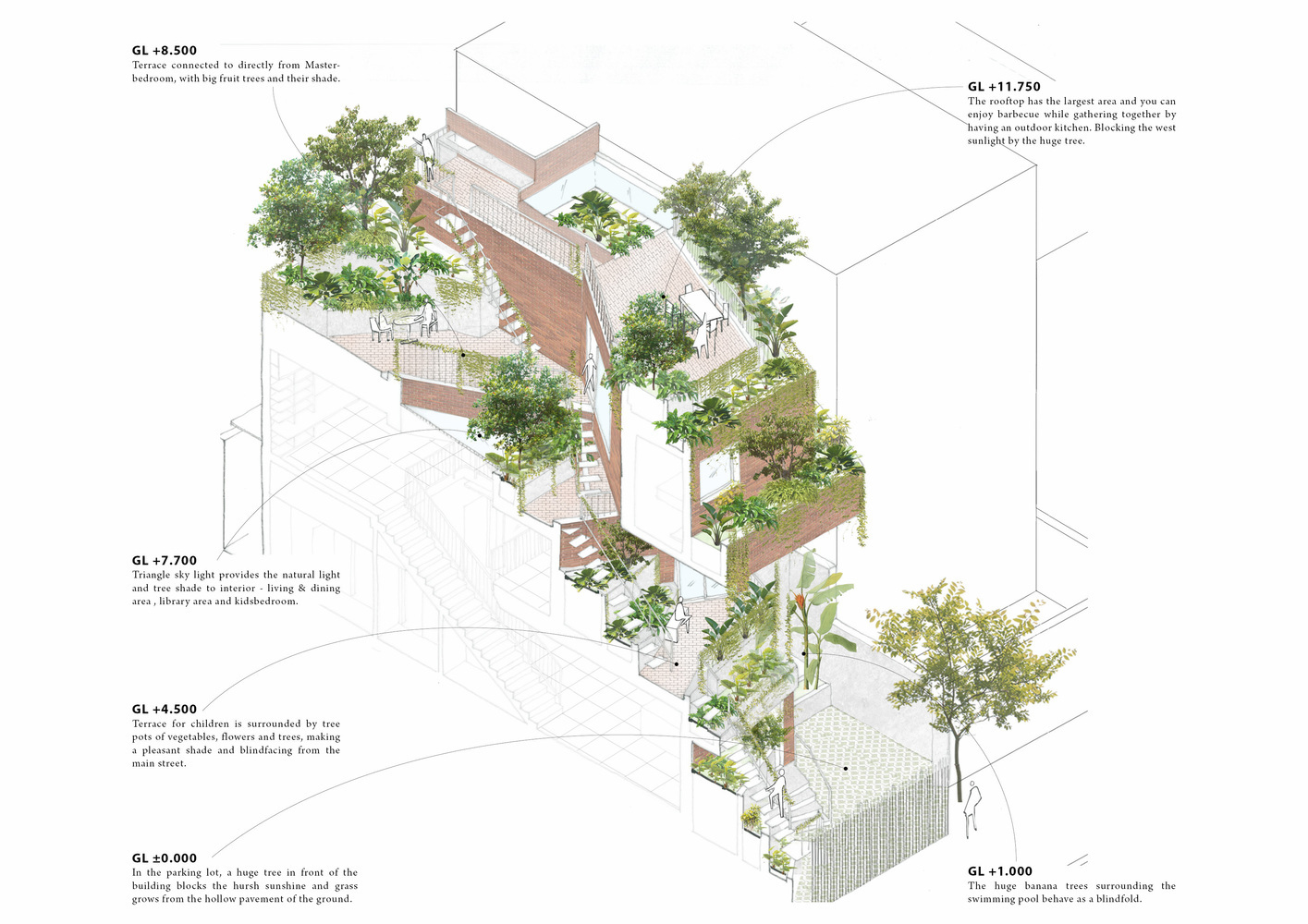
- Hybrid stacked. Private bedrooms and work rooms, shared kitchen and living space, with light wells and terraces in between.
- Extended. An addition or second building on an existing home’s lot, often as an ADU.
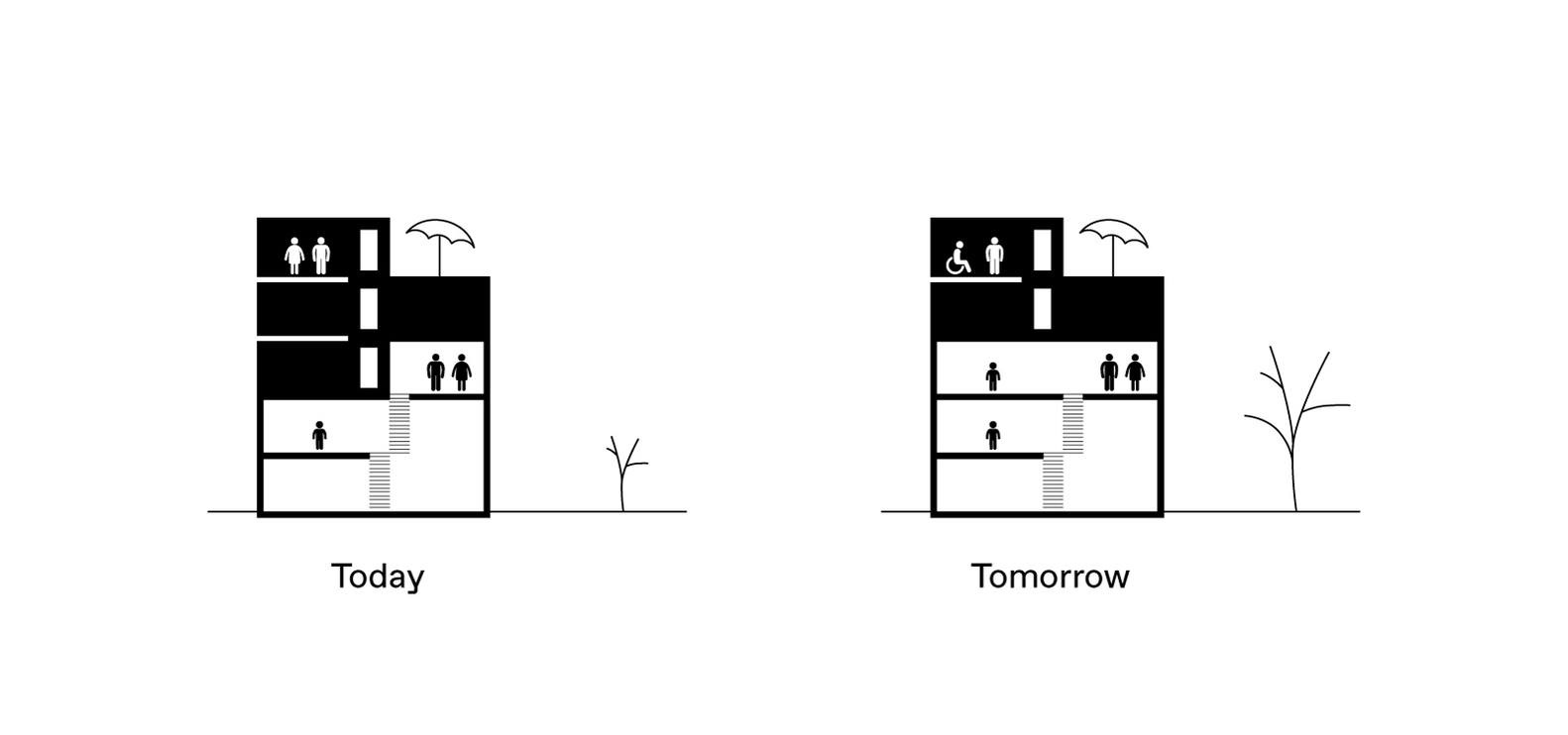
- Flexible. A house that reads as single-family, with rooms that change use as the family changes.
What to plan for
- Separate entries. Each household needs its own front door, even if the kitchen is shared.
- Aging in place. Put one full bedroom and bath on the ground floor, with no-step entries and wider doors.
- Sound. Floor and wall assemblies between households matter more than finishes.
- The legal form. An ADU or JADU keeps one lot. A duplex or a small-lot split under SB 684 or SB 1123 gives each household its own home, and sometimes its own parcel.
How we use it
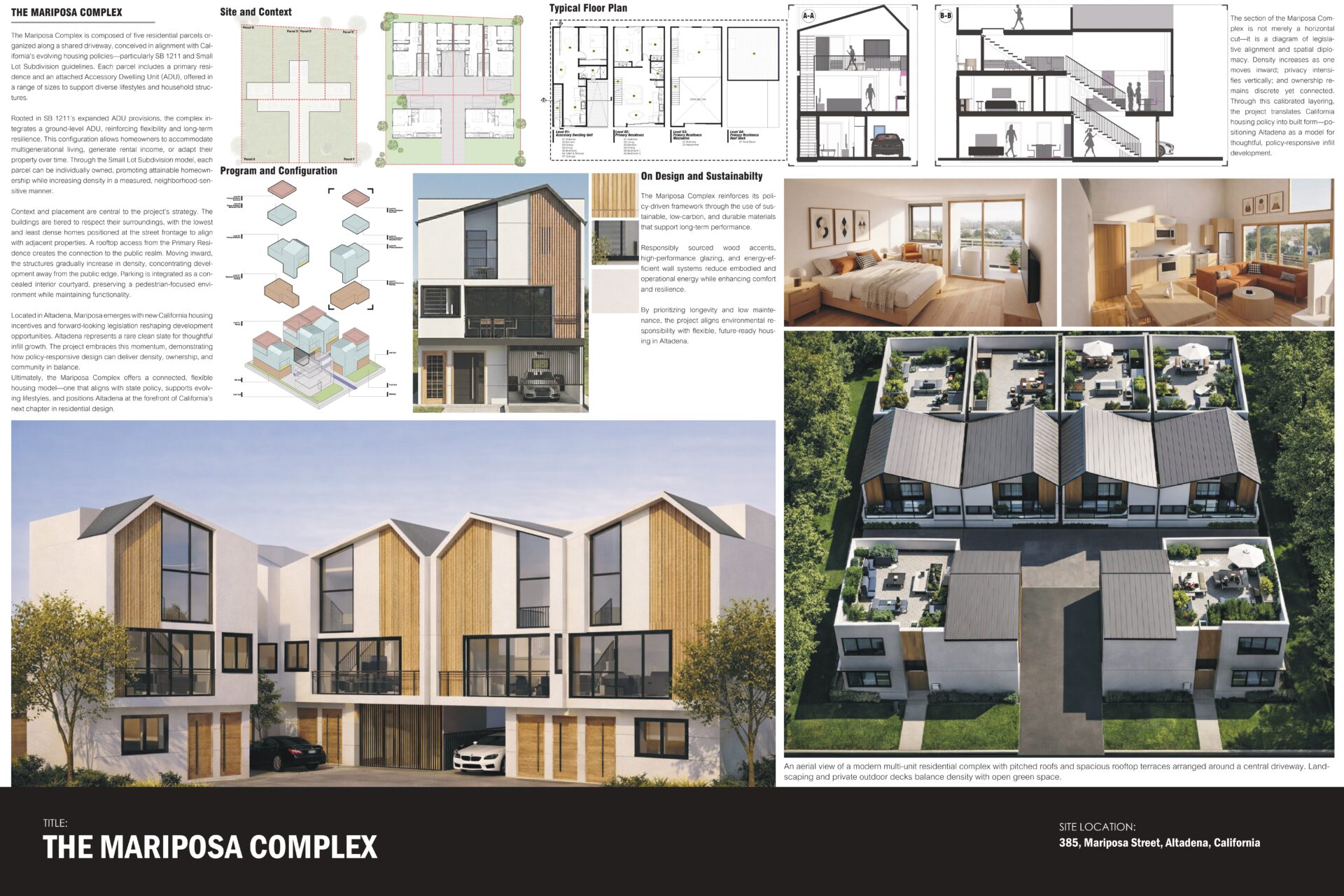
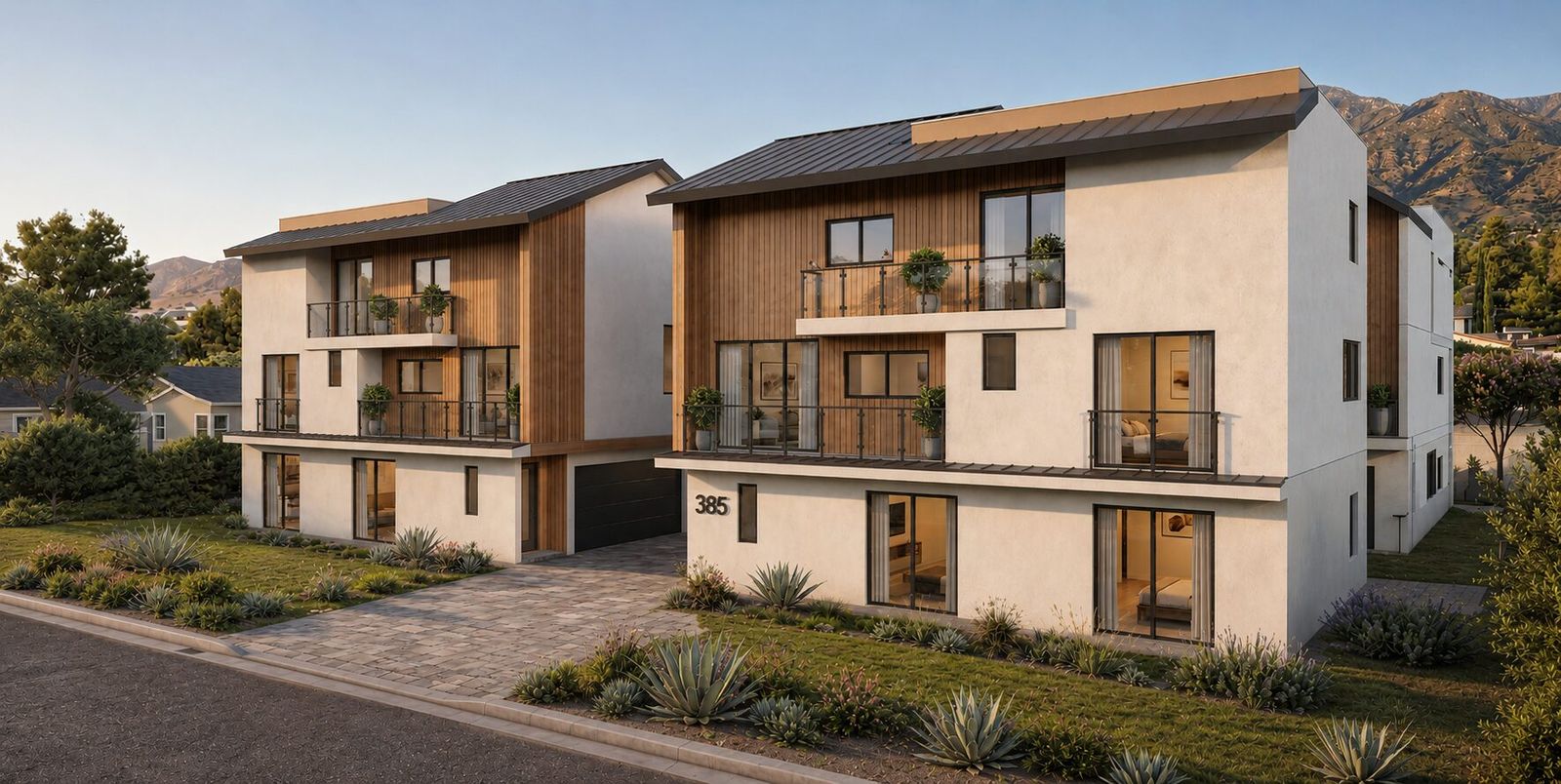
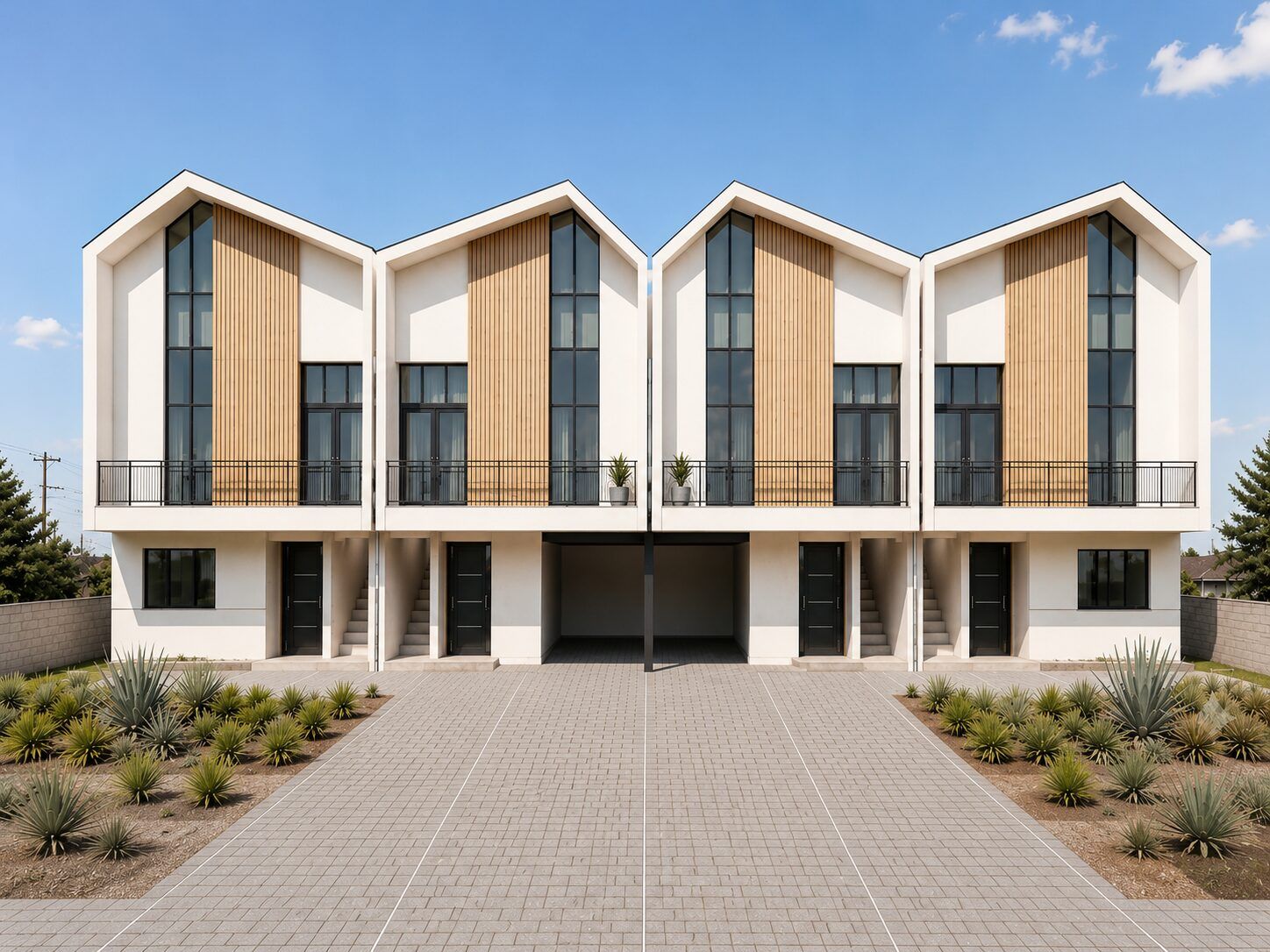
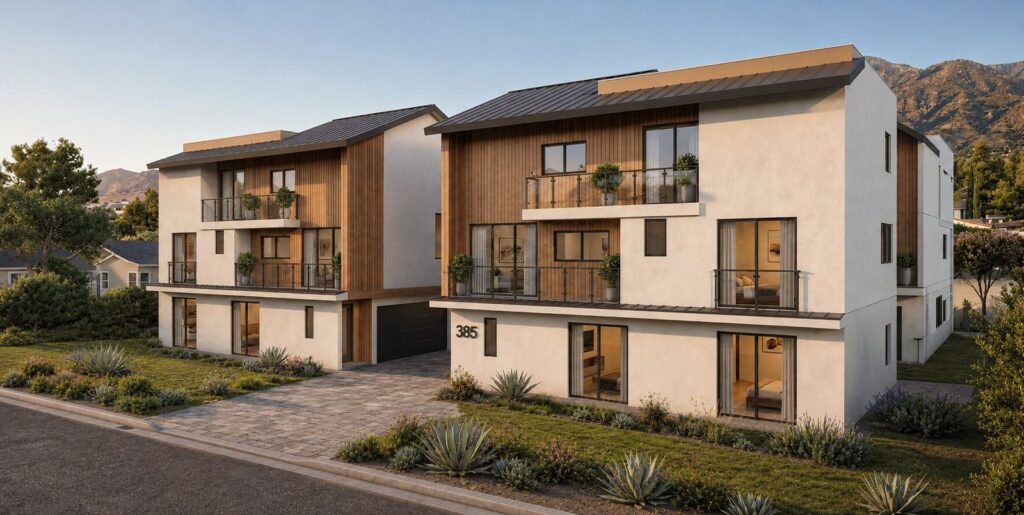
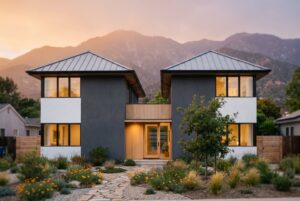
Our Foothill Residence stacks a home and a second household on one lot: a 2-bed unit with a garage on the ground floor, the main residence above. At Mariposa Complex in Altadena, a post-fire rebuild under SB 1123, each of three homes has an attached ground-floor ADU, so every house can hold two households. See how we approach small-lot subdivisions.
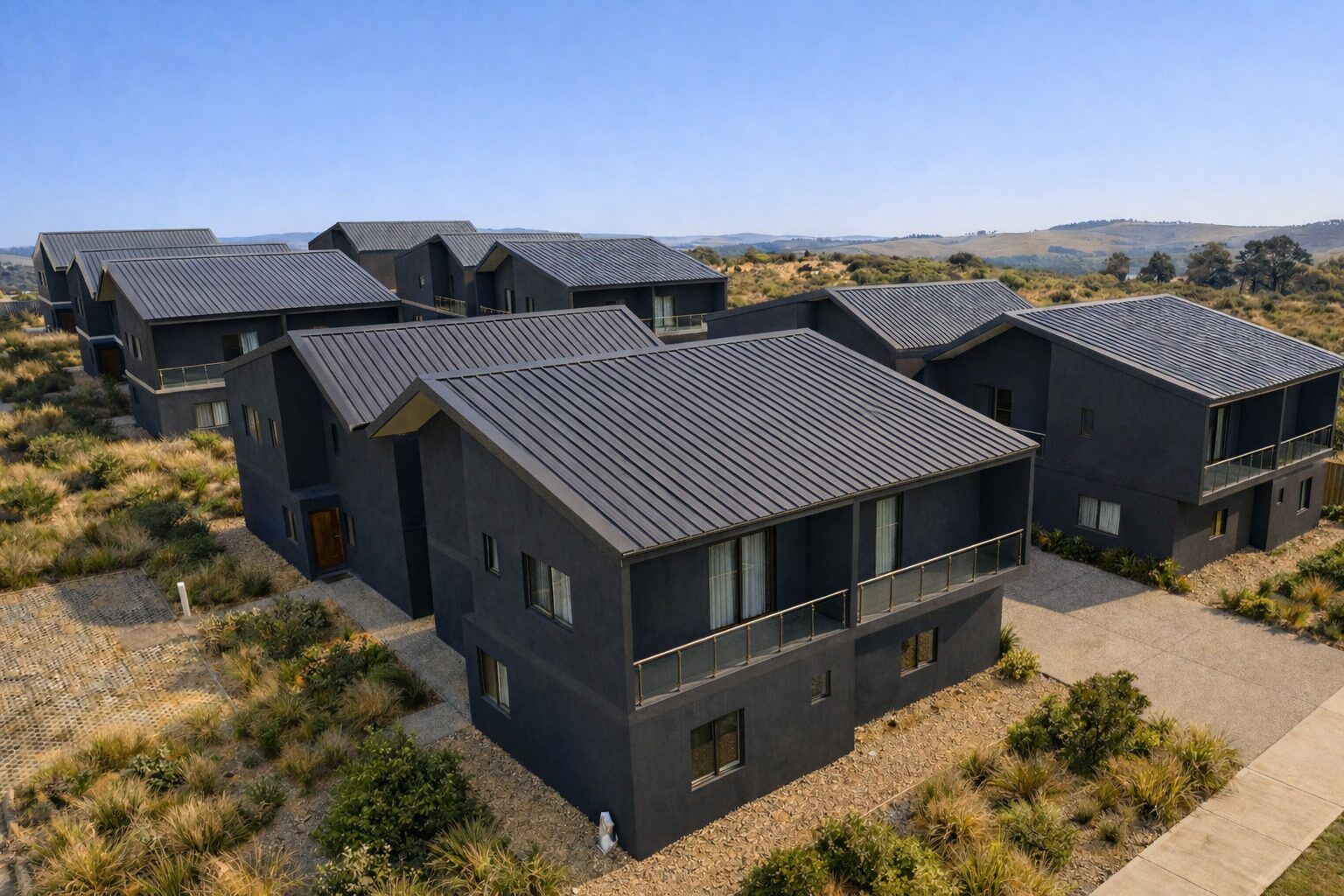
A home and a second household, stacked on one lot.
Have a lot in mind?
Send us the address and we’ll tell you what it can hold. Book a free consultation → · Follow @ydsarch on Instagram