Updated October 2026
SB 35 and SB 9 both take discretion out of housing approvals, but for different projects. SB 35 fast-tracks multifamily projects with affordable units in cities that are behind on their housing goals. SB 9 lets you build two homes on a single-family lot, or split it in two.
The short version
- SB 35 (2017) was extended by SB 423 through January 1, 2036. SB 423 took effect January 1, 2024.
- SB 35 projects set aside 10%, 20% or 50% of units below market, depending on location and the city’s progress. Approval comes in 90 or 180 days, depending on whether the project has more than 150 units.
- SB 9 (in effect since January 1, 2022) allows two homes on a single-family lot, or a split into two lots of at least 1,200 sf each, neither smaller than 40% of the original.
- An SB 9 lot split requires a signed affidavit that you’ll live in one unit for three years.
SB 35: who qualifies
Multifamily projects on sites zoned for housing, in jurisdictions that haven’t met their state housing targets. The project has to meet objective standards; there’s no discretionary hearing. SB 423 also opened parts of the Coastal Zone starting in 2025, while still excluding beaches, wetlands and high sea-level-rise areas. Sites in very high fire hazard severity zones and state responsibility areas remain out.
Labor rules: projects of 10 units or fewer have no prevailing-wage requirement. Larger projects pay prevailing wage, and the skilled-and-trained workforce mandate now applies only in narrow cases for buildings over 85 ft.
SB 9: limits and numbers
- Up to two primary homes per lot. With a lot split, up to four units across the two lots, counting ADUs and JADUs.
- Cities must allow homes of at least 800 sf.
- Side and rear setbacks of 4 ft.
- One parking space per unit, none within half a mile of transit or one block of car-share.
- No rentals under 30 days.
- Excluded: historic districts, very high fire hazard severity zones, prime farmland, hazardous waste sites and earthquake fault zones.
What to watch out for
SB 9 caps you at two units per lot, and the owner-occupancy affidavit rules out most investor lot splits. On a vacant single-family lot, SB 1123 now goes much further: up to 10 lots and 10 homes, approved in 60 days. SB 35, meanwhile, only applies where your city is behind on its targets, so check the state’s current determination before you design around it.
How we use it
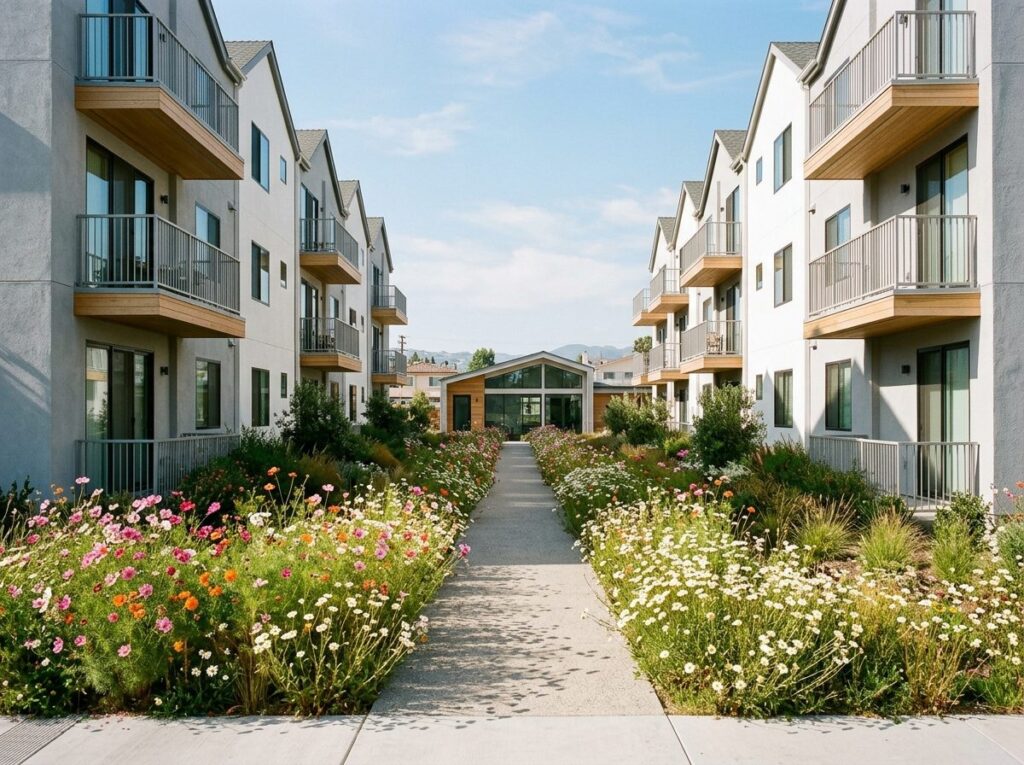
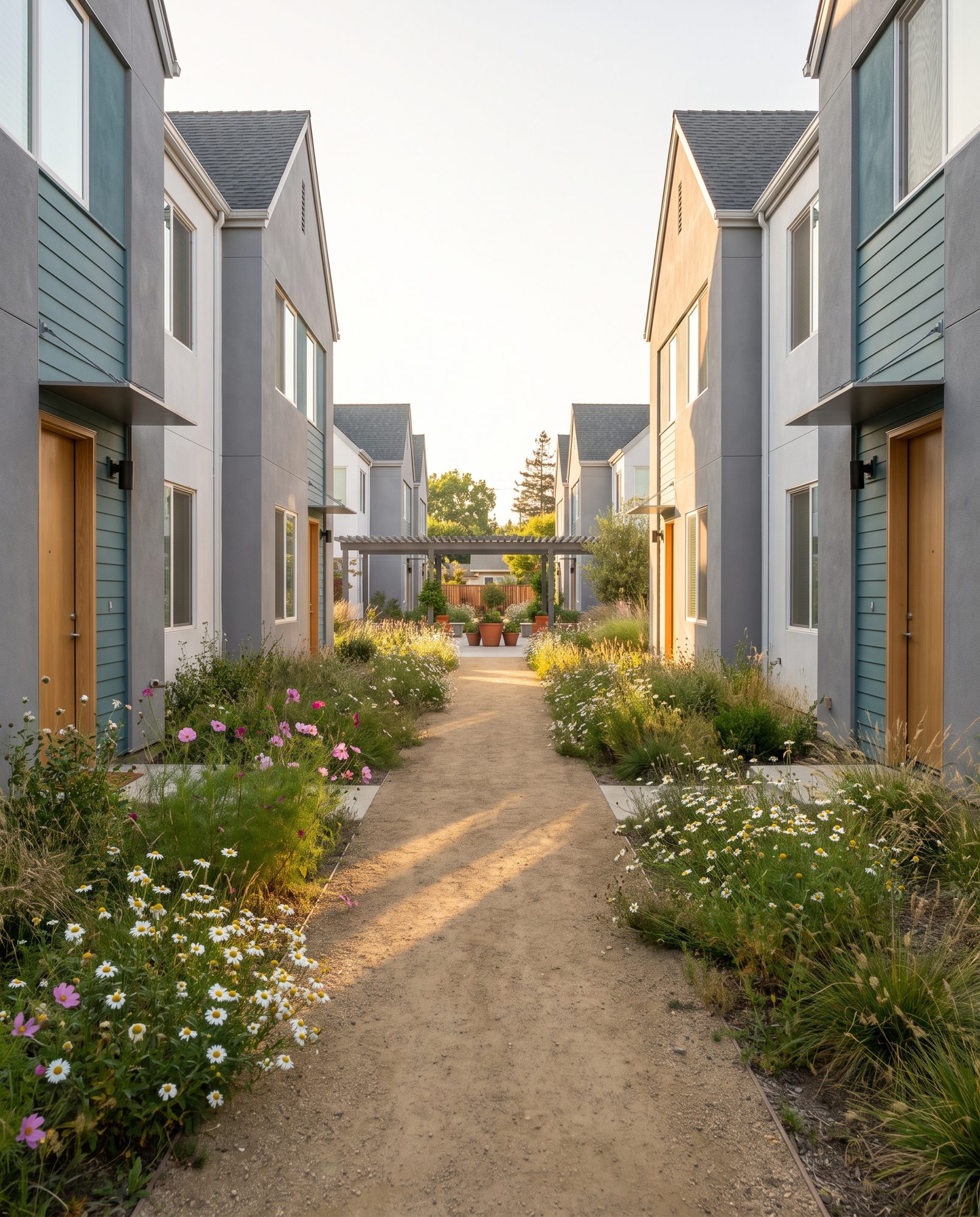
For small-lot work we usually reach for SB 684 or SB 1123. We used SB 684 to entitle Motor Complex in Culver City, a four-lot split of a 7,000 sf lot. La Puente Spine (concept) lines ten townhouses along one shared walk. See SB 684 and SB 1123 for how we compare the options on a given lot.
Have a lot in mind?
Send us the address and we’ll tell you what it can hold. Book a free consultation → · Follow @ydsarch on Instagram