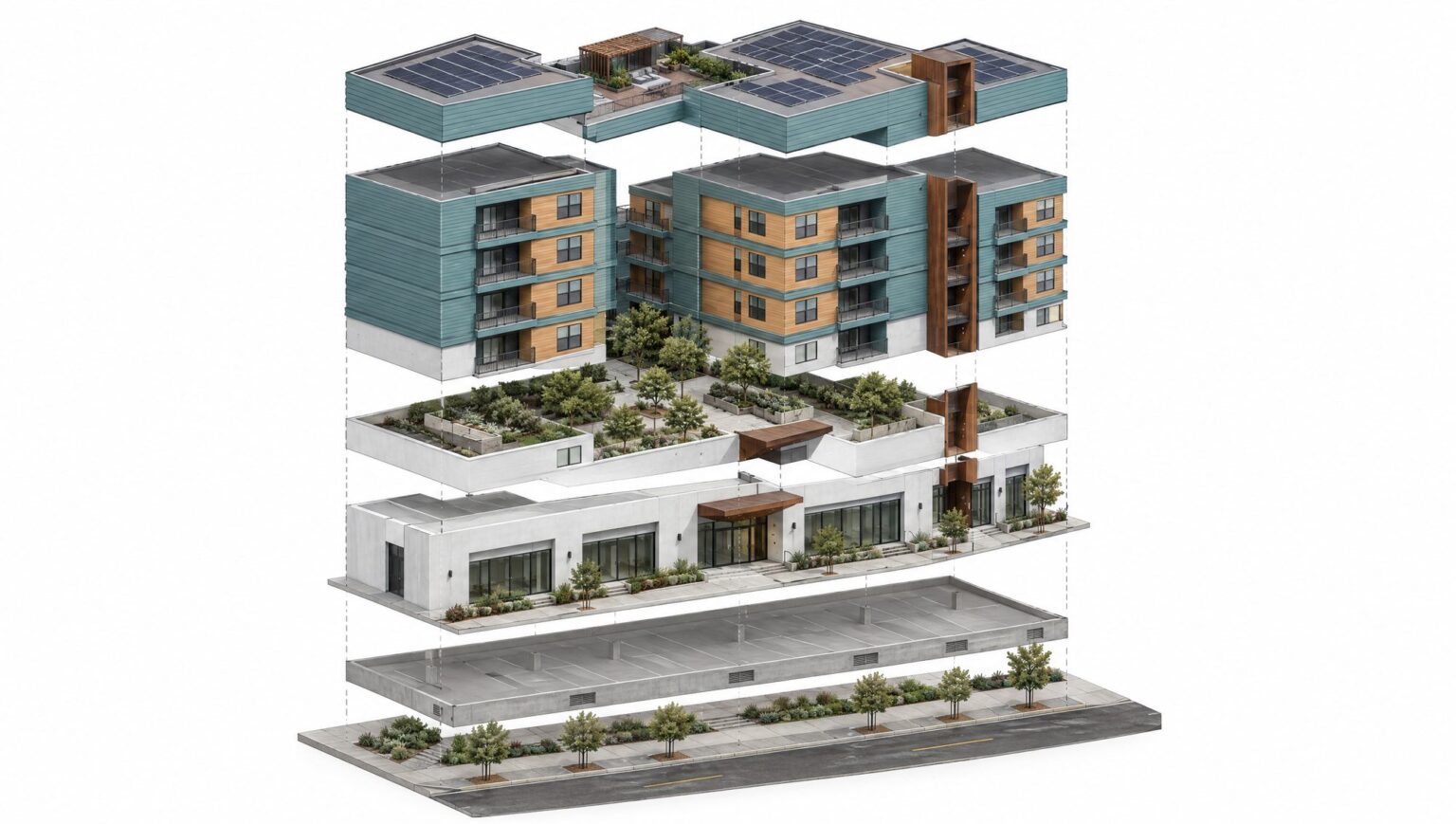
TOC, density bonus and housing incentive projects
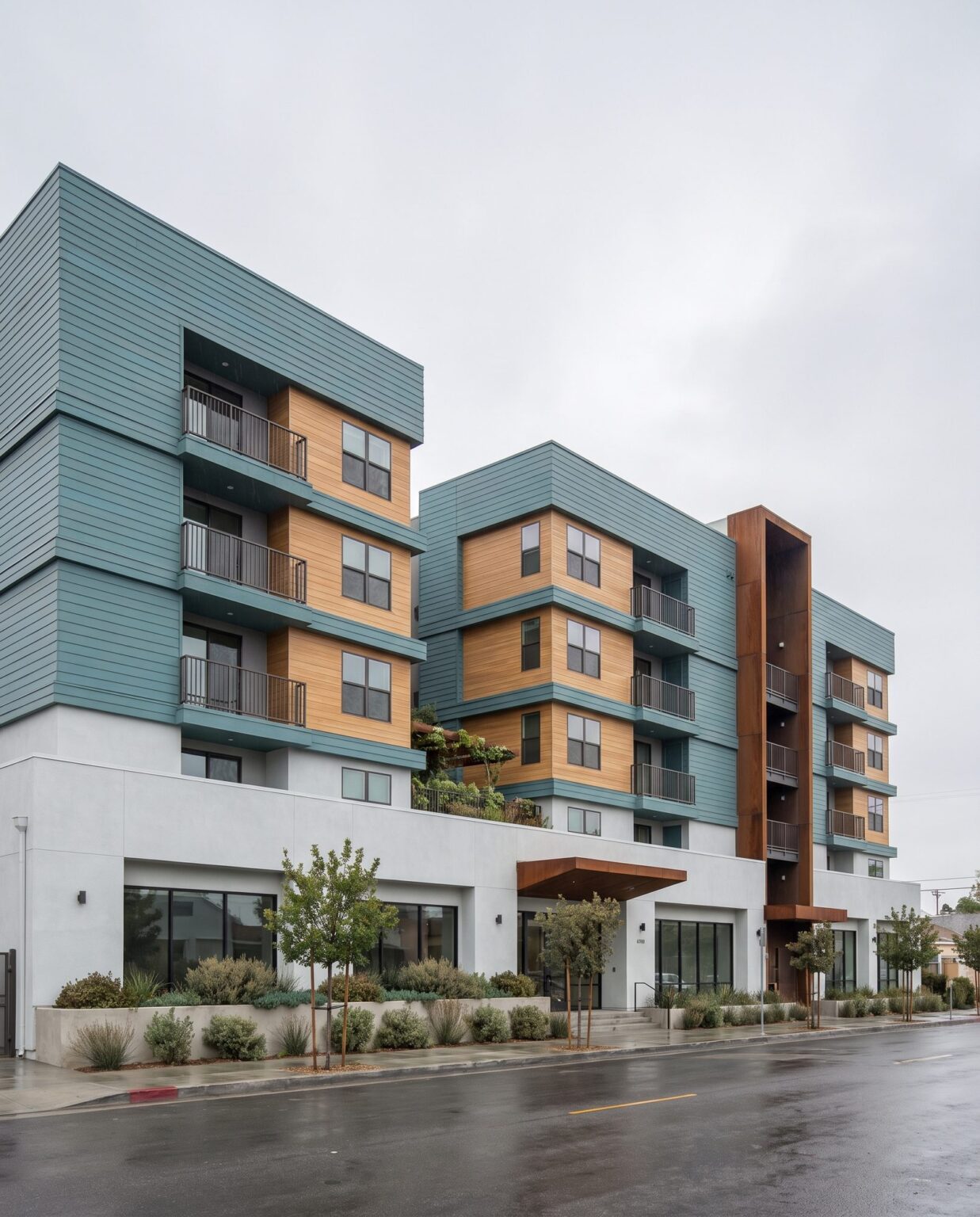
In Los Angeles, the number of apartments a lot can hold is rarely the number in the base zone. Transit incentives, the state density bonus law and the city’s newer housing incentive program can each add units, height and parking relief. We work out which fits the site and the pro forma.
The main tools
State density bonus
Gov. Code §65915: extra units, plus incentives and waivers, scaled to the share of affordable homes.
TOC and CHIP
Transit-oriented incentives near major transit stops, including the TOC tiers and the Citywide Housing Incentive Program that updates them.
AB 2097
No minimum parking near major transit, which often frees the ground floor for homes or retail.
100% affordable
Streamlined approvals for nonprofit and affordable-housing developers.
How we work
Every project starts with the same question: which combination of incentives gives the most homes the site and the financing can actually carry?
We answer it with numbers before design, then carry the building through entitlement and permit.
- Unit-count study
- Base zone against each incentive: units, height, parking and affordability side by side
- Pro forma check
- An ROI analysis, so the unit count is one you can finance
- Entitlement
- Plans, application package and responses to planning
- Permit
- Construction documents and plan check
Questions developers ask
Which incentive gives the most units?
It depends on distance to transit, the base zone, and how much affordability the pro forma can carry. The study answers it with numbers for your lot.
Do you work with affordable-housing developers?
Yes, including mixed-income and 100% affordable projects.