Housing law · SB 684 / SB 1123
A lot that held one house can now hold up to ten, each on its own parcel and sold on its own. The law makes that simple on paper. Making the homes good is the design work.
What the law allows
- SB 684 (2023): multifamily and commercial zones, on sites up to 5 acres.
- SB 1123 (2024): vacant single-family lots up to 1.5 acres, since July 1, 2025. Vacant means no permanent structure when you apply.
- No minimum frontage, width or depth, so long, narrow lots can work.
- Parking: no more than one space per home, and none near transit.
- Approval by staff, with no hearing and no CEQA review.
Who it fits
- Good fit: an underused R2–R5 or commercial lot, a deep lot with one old house, or vacant single-family land.
- Good fit: a small builder who can carry four to ten homes, not a hundred.
- Not a fit: a single-family lot that still has a house on it.
- Not a fit: sites with rent-stabilized units or tenants in the last five years.
- Check first: fire, hillside and historic overlays can still narrow what fits.
How we use it
Three ways to use the law
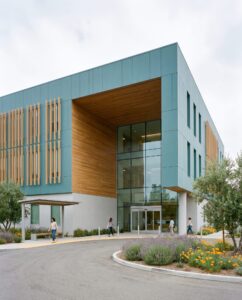
Motor Complex
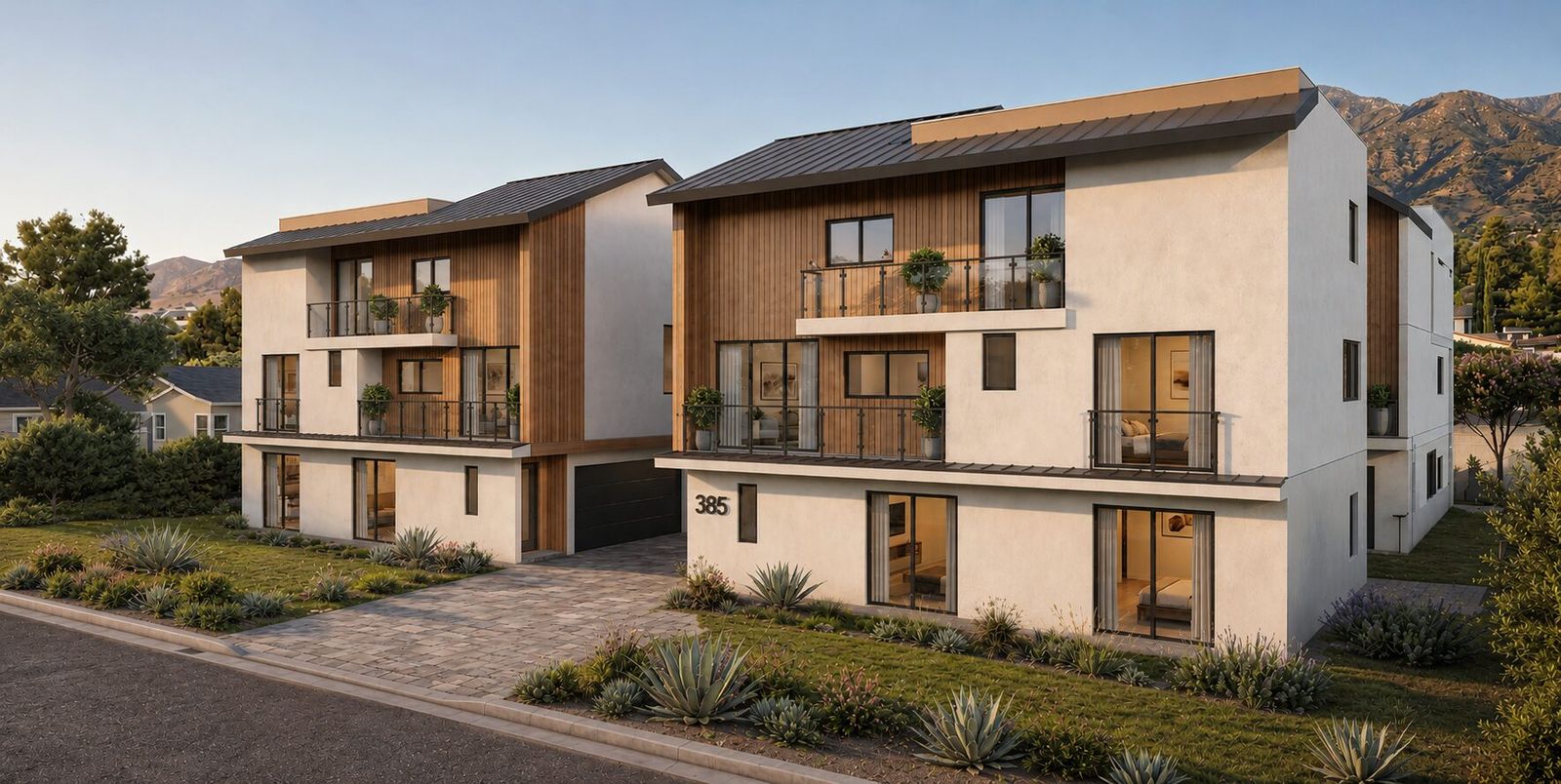
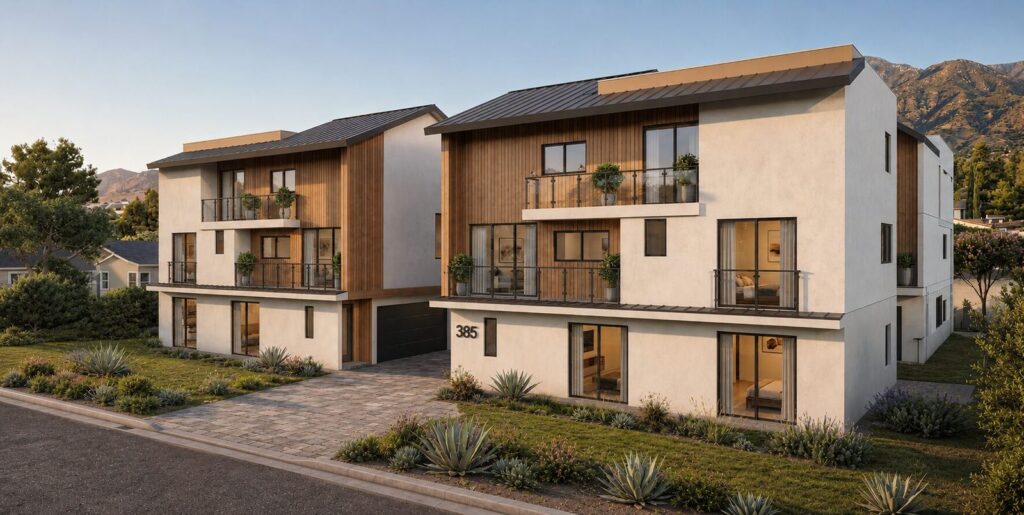
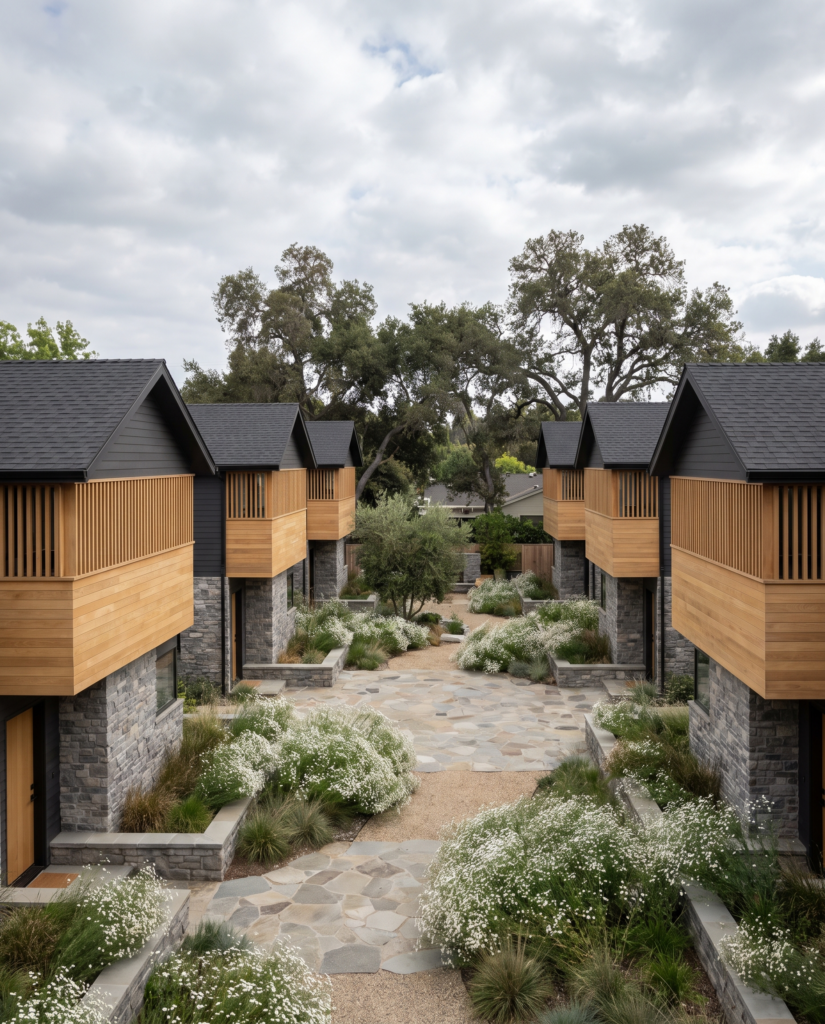
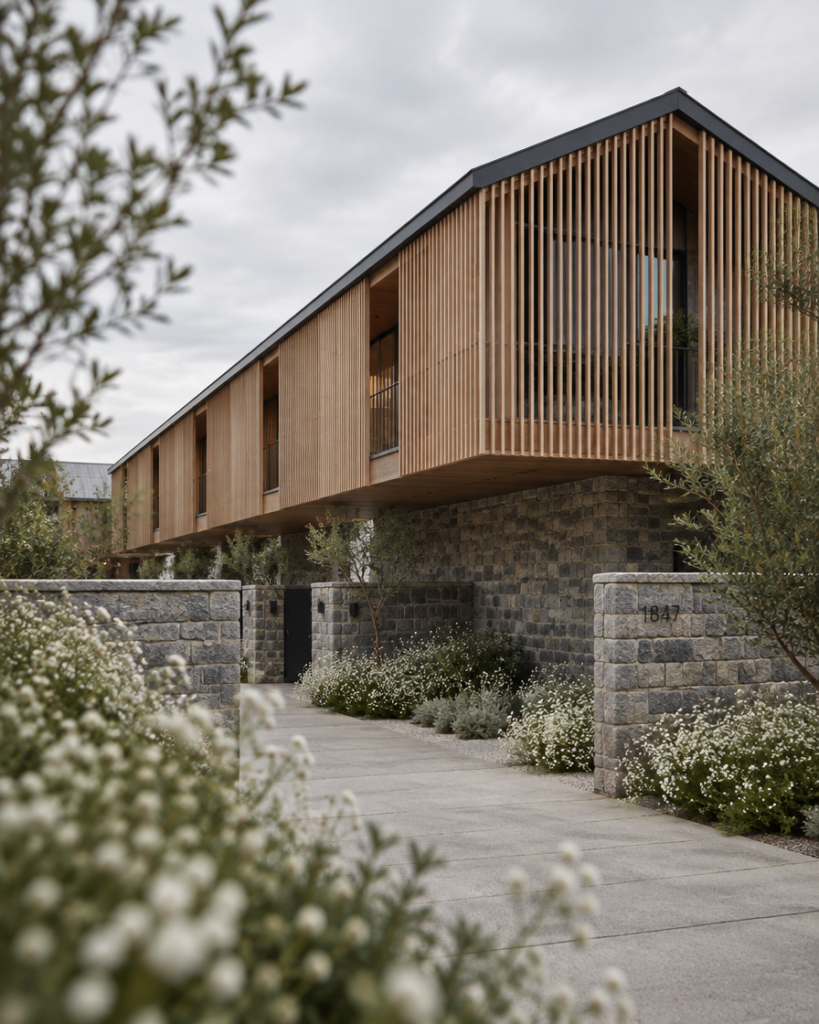
Our SB 684 subdivision in Culver City: one lot split into four, with homes of about 1,500 square feet. On a lot this narrow, access and daylight set the plan before square footage does.
Six homes, one garden
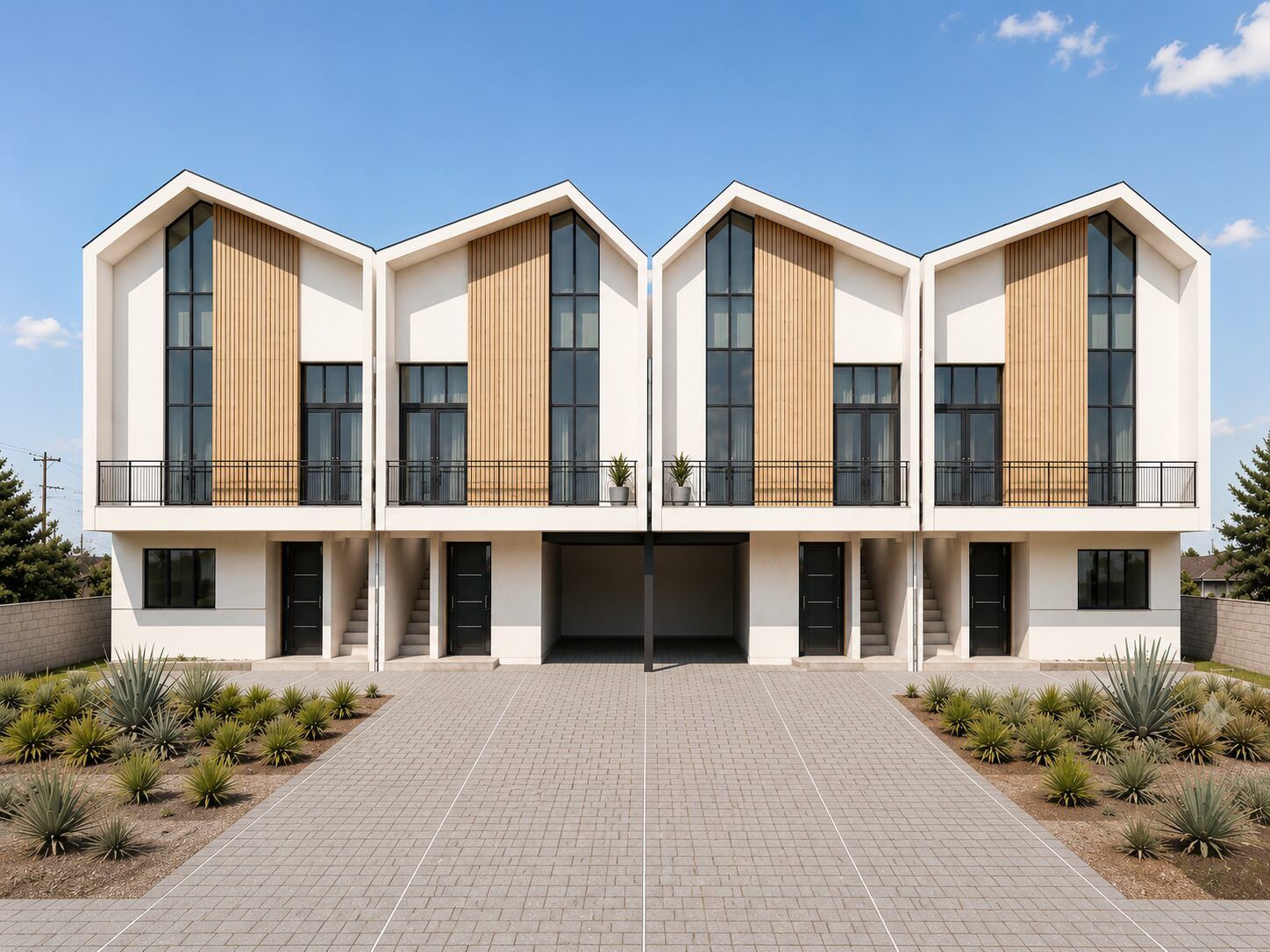
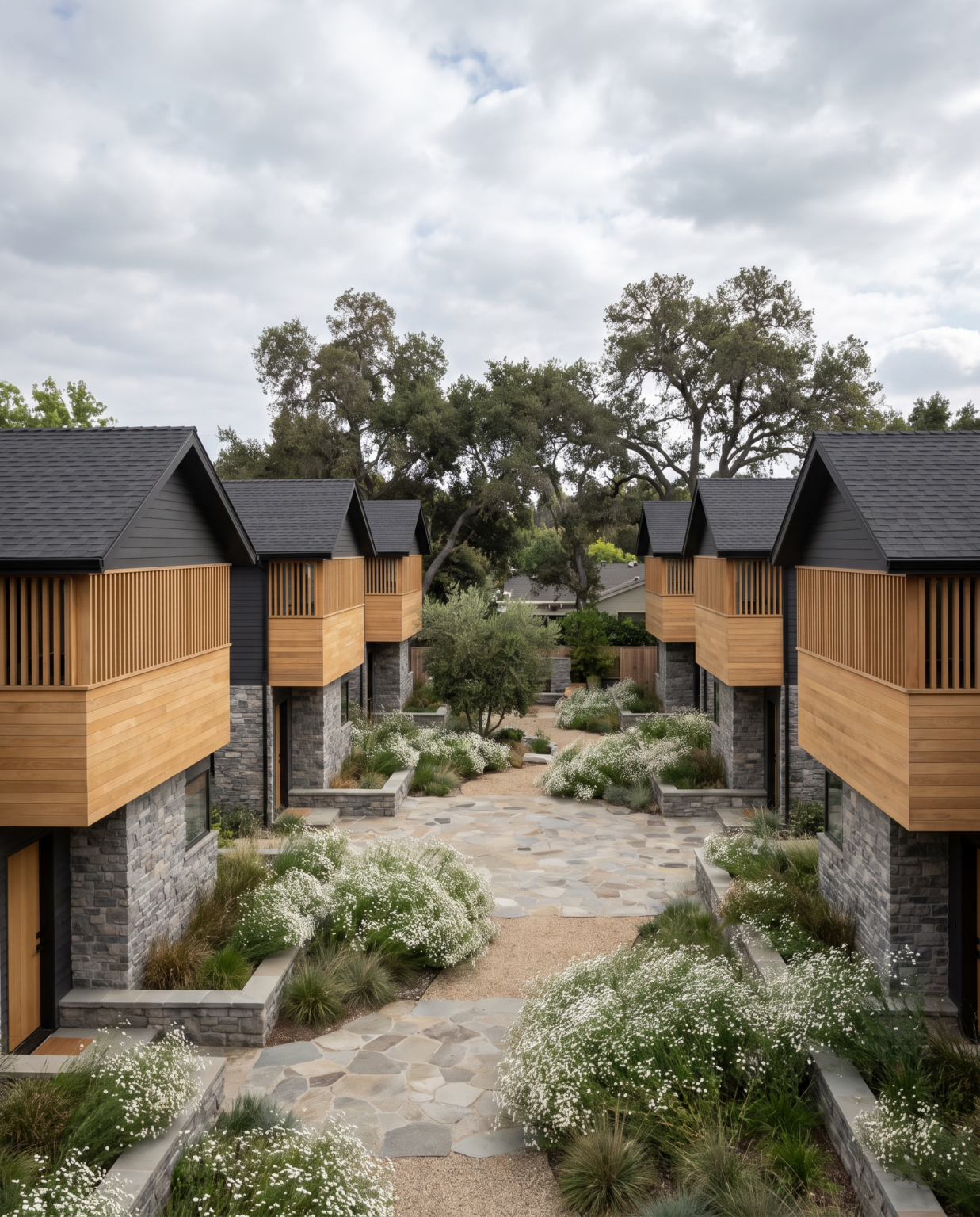
Instead of a row of garage doors, the homes face each other across a shared courtyard. Stone bases carry the garden walls; light oak screens shade the rooms above.
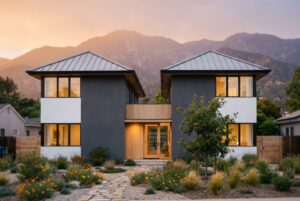
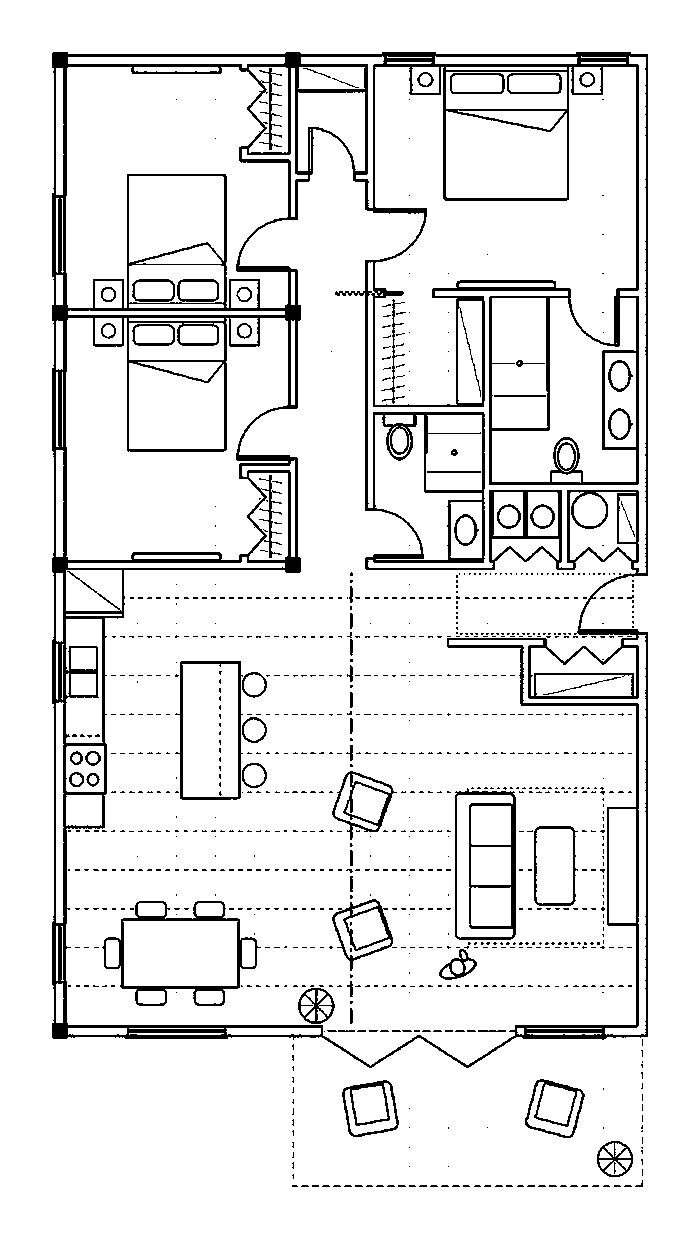
A house on its own small lot
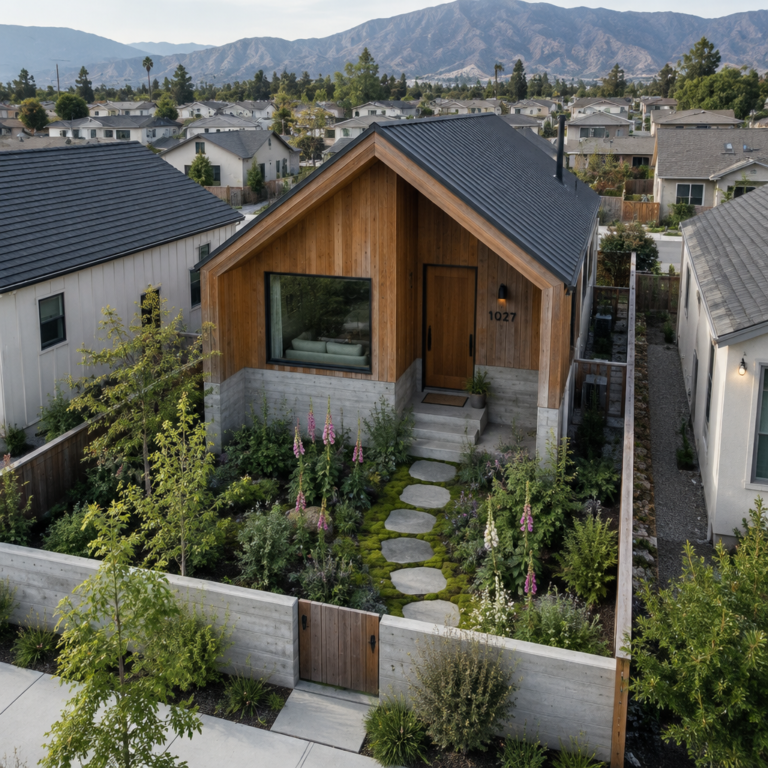
One detached home on a narrow parcel: a concrete base, cedar siding, and a deep porch at the front. Its own yard, its own deed.
Where the design work is
The law caps size. It doesn’t make a place.
On a small lot every foot counts, but the gaps between homes count more. We plan the shared ground first, then fit the houses to it.
Access first
A shared drive or path decides whether homes face each other or line up as garages.
Light over area
The space between buildings is worth more than the last hundred square feet inside.
Mix the sizes
The 1,750 sf cap is an average. A few larger homes and a few smaller ones widen who can buy.
Utilities early
Sewer, water and fire-truck access shape more layouts than zoning does.
Check your lot
Four questions settle most of it. Cities are still publishing their own forms and fees, so the final answer is always site-specific.
- What is the zone: multifamily, commercial or single-family?
- If single-family, is the lot vacant, with no permanent structure?
- Are there tenants now or in the last five years, or rent-stabilized units?
- Do fire, hillside, historic or coastal overlays apply?
What can your lot hold?
Send us the address. A Los Angeles architect from our studio will tell you what fits.
Sources
- Los Angeles City Planning: SHRA / SB 684 and SB 1123
- California Legislative Information: SB 1123 bill text
- ABAG: SB 684 and SB 1123 overview
- Allen Matkins: Amendments to the Starter Home Revitalization Act
Renderings are YDS design studies unless marked entitled.